VOL. 31 NO. 1
SEPTEMBER 2026
The Ziegler Report
Oil and Gas, Safety, and Construction

OSHA and EPA Hearings
The Occupational Safety and Health Administration (OSHA) and the Environmental Protection Agency (EPA) are finally moving forward with hearings on proposed rulemaking or changes for a number of issues, including rules for asbestos, respirators, and ladder safety devices. These hearings are part of a multiyear and often delayed rulemaking process that appears to now be moving forward.

‘Death Discount’ Removed?
While federal OSHA and a number of states still follow this policy, the discount for citations and fines is gradually being eliminated around incidents resulting in worker deaths.
Often decreased penalties for such factors as small employers lower as much as 80% the penalties for serious incidents.
Highway Work Zone Safety
An Annual Work Zone Awareness Survey of 600 construction firms show that 51% say that the risk of crashes and of worker injuries is increasing. About 60% of the surveyed companies report a crash in the last year and 33% report more than five crashes in the last year.
Risk Management
Many work places face hazards. To reduce risks and prevent incidents, hazards need to be systematically identified, evaluated, and appropriately controlled. The National Institute for Occupational Safety and Health (NIOSH) and OSHA guidance on hazard prevention and control is one example of a method that offers a clear framework that any organization can apply — regardless of industry or size. The same or similar methods can be used to keep all people safe on work sites, (e.g., customers, the public) not just employees.
There are many ways to identify and learn about hazards so they can be controlled. For example, employees who perform the work every day may identify risks. Hazards can also be identified using methods like walking the site to look for circumstances that have the potential to lead to injury, loss of life, or property damage. Employers or others can also collect information from existing safety data, industry standards, or manufacturer guidance, as well as outside safety and health experts or site representatives — to provide some examples.
Once hazards are identified, the next step is selecting hazard controls. Not all hazard control methods are created equal. OSHA and NIOSH have implemented a hierarchy that ranks solutions from most to less effective:
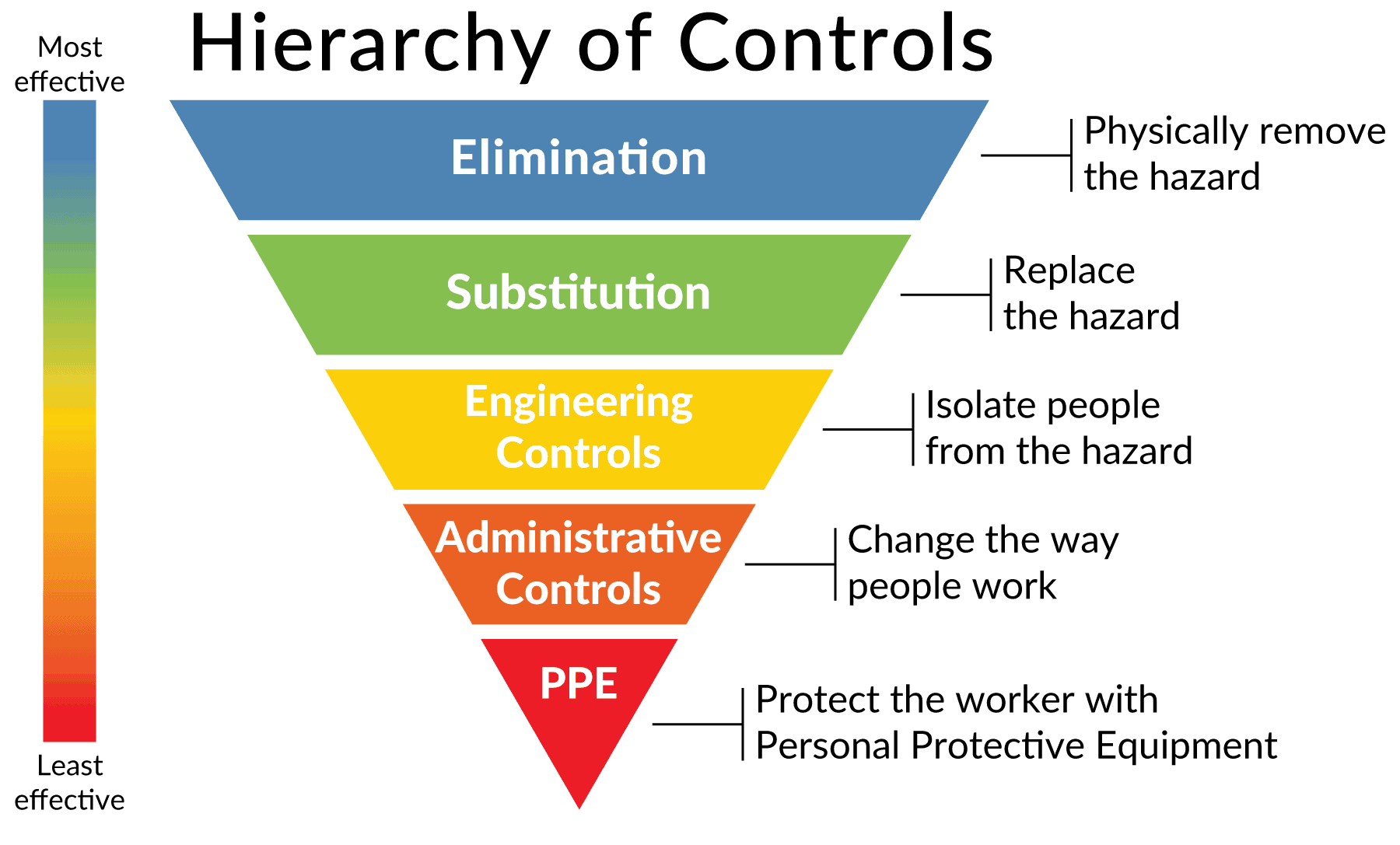
See NIOSH and OSHA publications that have adopted, promote, and implement this methodology or protocol.

About Edward R. Ziegler
Edward R. Ziegler is a registered Professional Engineer (PE) and a Certified Safety Professional (CSP). His background includes experience in the oilfield, safety, pipeline, and construction industries, as well as various other areas. Mr. Ziegler has oilfield experience in drilling, completion, production, reservoir, and construction, both onshore and offshore. His experience includes oilfield and non-oilfield projects, including owning and operating a maritime, oilfield, and plant welding, fabrication, and maintenance company. He also performs safety consulting and regulatory work and has been trained as an instructor through U.S. Department of Labor, OSHA programs.